COCHINITA PIBIL
- Rafael Paramo
- Jul 18, 2024
- 2 min read


Cochinita pibil is a dish I have always enjoyed preparing, and it excites me to make it for others because it has everything: complexity, seasoning, long cooking times, and above all, flavor. This dish can be found in almost every Mexican restaurant abroad, and it is one of the dishes that the entire country is proud of.
Cochinita pibil originates from the Yucatán region and has its roots in the pre-Hispanic era of the Mayan land. This wonderful preparation was made with deer, turkey, and peccary meat (a Mexican endemic species similar to a wild pig), cooked with achiote, which is a mixture of seeds from the achiote tree. These seeds are mixed to form a paste with orange and reddish hues, used as a condiment, especially in the Yucatán area.
Once the meat is seasoned and marinated, it was cooked in the pib, a traditional earthen oven used since the Mesoamerican era, where vegetables and whole animals were traditionally cooked. These were dug into reddish earth or sand to depths of up to a meter, and the proteins were usually wrapped in banana leaves or placed in pots to aid the cooking process, which was done over low heat, taking up to 16 hours to cook (as is the case with cochinita pibil).

With the arrival of the Spanish in America, the protein was changed to pork, and the method of cooking the meat also changed, from earthen ovens to steam pots or traditional ovens, thus facilitating the cooking process and reducing time.
Cochinita pibil has evolved into a highly complex dish, and today it can be eaten in tacos, tortas, panuchos, etc., but it must always be accompanied by a sauce called xnipec, which is made with sour orange juice, pickled red onion, and habanero chili.
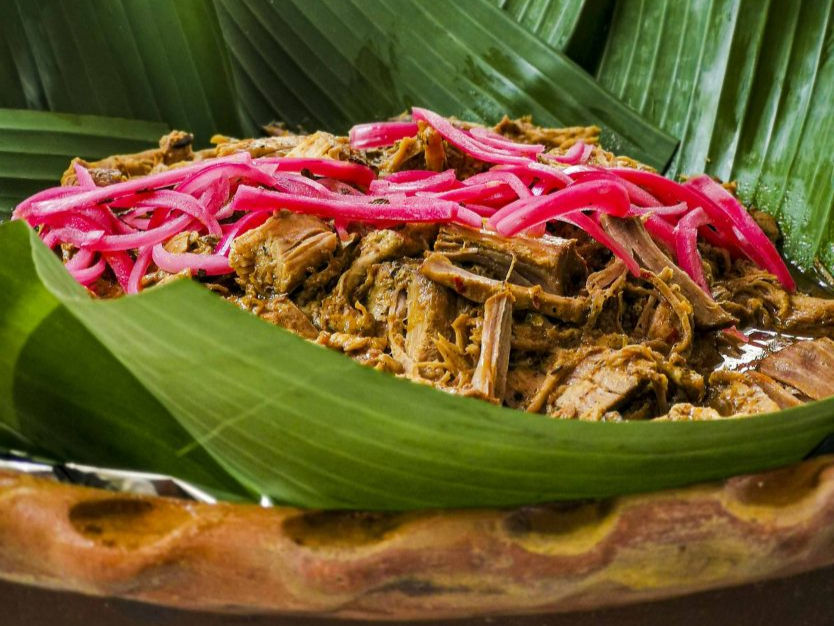
While various recipes for cochinita pibil can be found that are very close to the traditional version, I love to give my recipe a personal touch by mixing achiote with orange and lime juice, allspice, cumin, oregano, onion, salt, and cloves. I marinate the meat with this mixture along with bay leaves and cinnamon for an entire night. Although this recipe deviates slightly from the most traditional version, this blend combined with my seasoning results in a dish that people love.
I also slightly modify the xnipec sauce. When I was taking a Mexican cooking course at my university, we were taught a variation that included a mix of apple cider vinegar and white vinegar, along with sour orange and lime juice, oregano, salt, and pepper. I have served this variation abroad, and it is truly a winning recipe.
Cochinita pibil is one of the most important dishes in Mexican cuisine, and each place prepares it a little differently, blending flavors and traditions to create a unique dish. Now it's your turn to try this wonderful delicacy and even attempt to make it yourself. Here are some tips to make your recipe a delight. Enjoy!


Comments